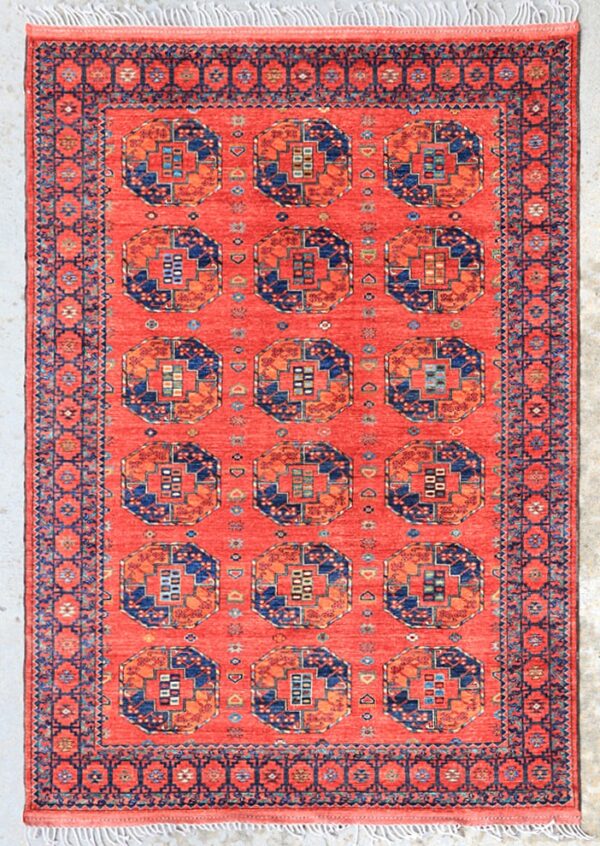


An Afghan Turkoman Ersari Gul-i-Gul rug, knotted by hand with hand-carded, hand-spun, vegetable-dyed wool, woven by master weavers in northern Afghanistan.
The repeating octagonal medallions are known as guls, from the Persian gol, meaning “flower,” and traditionally served as distinctive emblems within the weaving cultures of the Turkoman tribes of Central Asia. Their lineage reaches back through medieval Central Asian and Anatolian carpet traditions, where related motifs appear in carpets woven in the fourteenth and fifteenth centuries, and later became familiar in Europe through Renaissance paintings depicting these prized Oriental carpets. Commonly known as Bokhara or “elephant-footprint” rugs, these bold repeating gul designs have remained among the most recognizable and enduring expressions of Turkoman weaving for centuries.
$3,950.00
| Age | 2024 |
|---|---|
| Color | Red, Rust |
| Material | Wool |
| Origin | Afghanistan |
| Type | Ersari, Gul-i-Gul, Turkoman |
| Size | 6×9 |